
What's in Store?

Anjou Pear
COMING SOON
Anjou pears, also known as d'Anjou pears, are a popular, bell-shaped European pear variety with thin, green or red skin and dense, sweet, firm flesh. They are versatile for eating fresh, as a snack, or for cooking, baking, and poaching, and are a late-season variety available from late fall to spring. To ripen, keep them at room temperature, and to check ripeness, gently press the neck, which should give slightly.


Turks Turbin Squash
IN STOCK
visually striking, heirloom winter squash known for its vibrant, multi-colored, turban-like cap and irregular shape. It is prized for its beauty as a fall decoration but also for its edible flesh, which has a mild, sweet, and nutty flavor with a dense, firm, and floury texture similar to butternut squash

Bartlett Pears
SOLD OUT
Considered the traditional pear shape in the west, and its green skin turns yellow upon later ripening, although red-skinned derivative varieties exist. It is considered a summer pear, not as tolerant of cold as some varieties. It is often eaten raw, but holds its shape well when baked, and is a common choice for canned or other processed pear uses.
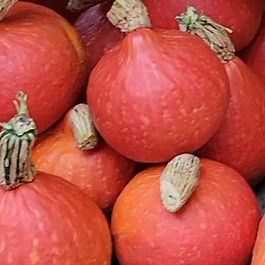
Red Kuri Squash
IN STOCK
Full-flavored and sweet, red kuri squash is often cooked with butter and herbs. It is an ingredient in a variety of soups, stews, and casseroles. It can be made into cakes, quick breads, muffins, cookies, jams, and pies with its nutty-tasting flesh. It can be baked, boiled, microwaved, steamed, sautéed or fried. This squash adds sweet flavor and texture to stir-fries. Its seed cavity is ideal for stuffing.


Honey Boat Delicata Squash
IN STOCK
Delicata squash is most commonly baked but can also be microwaved, sautéed or steamed. It may be stuffed with meat or vegetable mixtures and is known for its ease of cooking and creamy flavor and texture. The seeds of the squash are also eaten, usually after being toasted. This squash is not as rich in beta-carotene as other winter squashes but is a good source of dietary fiber and potassium, as well as smaller amounts of vitamins C and B, magnesium, and manganese.

Butternut Squash
IN STOCK
Butternut squash is a type of winter squash that grows on a vine. It has a sweet, nutty taste similar to that of a pumpkin. It has tan-yellow skin and orange fleshy pulp with a compartment of seeds in the blossom end. When ripening, the flesh turns increasingly deep orange due to its rich content of beta-carotene

Spaghetti Squash
IN STOCK
Spaghetti squash or vegetable spaghetti They are available in a variety of shapes, sizes, and colours. Its center contains many large seeds. When raw, the flesh is solid and similar to other raw squash. When cooked, the meat of the fruit falls away from the flesh in ribbons or strands that look like and can be used as an alternative to spaghetti.

Acorn Squash
IN STOCK
Acorn Squash is a winter squash with distinctive longitudinal ridges on its exterior and sweet, yellow-orange flesh inside. Although considered a winter squash, acorn squash belongs to the same species (Cucurbita pepo) as all summer squashes (including zucchini and crookneck squash).


Kobocha Squash
IN STOCK
Kabocha has an exceptionally sweet flavor, even sweeter than butternut squash. It is similar in texture and flavor to a pumpkin and sweet potato combined.[6] Some kabocha can taste like russet potatoes or chestnuts.[citation needed] The rind is edible, although some cooks may peel it to speed up the cooking process or to suit their personal taste preferences. Kabocha is commonly used in side dishes and soups, or as a substitute for potato or other squash varieties.


